Evaluating the Human Brain Illustration for Professional Design Applications
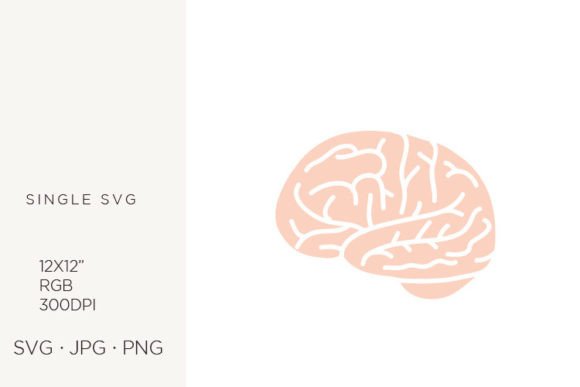
In the landscape of digital design assets, specificity and versatility often sit at opposite ends of the spectrum. However, certain resources manage to bridge this gap effectively, offering high-quality visual elements that serve both niche educational purposes and broad commercial applications. The Human Brain Illustration is one such asset. Designed with precision in Adobe Illustrator and delivered in multiple formats, this graphic element represents a practical tool for creators who require anatomical accuracy without sacrificing aesthetic flexibility. For professionals ranging from medical marketers to independent crafters, understanding the technical specifications and potential use cases of this illustration is essential for integrating it seamlessly into existing workflows.
Technical Specifications and File Integrity
The foundation of any reliable digital asset lies in its technical construction. This particular Human Brain Illustration is built on a robust vector framework, originally created in Adobe Illustrator. This origin is significant because it ensures that the lines, curves, and details remain crisp regardless of scaling. Whether the image is reduced to the size of a business card icon or enlarged for a large-format wall print, the integrity of the design remains intact. This scalability is a critical feature for designers who need to maintain brand consistency across various media types.
The asset is distributed as a ZIP file containing three distinct file formats, each serving a specific function in the design process:
- SVG (Scalable Vector Graphics): This file is ideal for web design, app interfaces, and modern digital platforms. SVGs are code-based, allowing developers and designers to manipulate colors and sizes via CSS or JavaScript without losing quality. It ensures fast loading times and sharp rendering on high-resolution displays.
- PNG (Portable Network Graphics) at 300 DPI: Featuring a transparent background, this raster format is indispensable for layering the brain illustration over other graphics, photographs, or colored backgrounds in software like Photoshop or Canva. The 300 dots-per-inch resolution ensures that printed outputs remain sharp and free from pixelation.
- JPG (Joint Photographic Experts Group) at 300 DPI: This standard raster format is suitable for quick previews, social media posts, or instances where a white background is acceptable or preferred. It provides a universal compatibility option for users who may not have advanced design software.
The artboard size is set at 12x12 inches, a square format that offers ample working space while remaining manageable for most standard printing processes. The RGB color palette indicates that the primary optimization is for digital screens, which is standard for most modern design assets. However, the high resolution allows for competent conversion to CMYK for print purposes, provided the designer manages color profiles appropriately.
Versatility Across Industries and Projects
The true value of the Human Brain Illustration emerges when examining its adaptability across diverse industries. While the subject matter is scientific, the clean, illustrative style allows it to transcend strict medical contexts. Here is how different professionals might leverage this asset:
Education and Academic Publishing
Educators, textbook publishers, and e-learning course creators require visuals that are accurate yet engaging. A overly complex anatomical diagram can overwhelm students, while a simplistic cartoon may lack credibility. This illustration strikes a balance, offering a recognizable and structured representation of the brain. It can be used in biology textbooks, psychology presentation slides, online certification courses, and study guides. The ability to isolate specific parts of the vector file allows educators to highlight particular regions, enhancing the pedagogical value of the material.
Healthcare and Wellness Marketing
For mental health professionals, neurologists, and wellness brands, visual communication is key to building trust and explaining complex concepts. This asset can be integrated into brochures, clinic signage, and website banners. For example, a therapy practice might use the illustration in a calming color palette to discuss cognitive behavioral therapy, while a neurology clinic might use it in a more clinical, high-contrast style for patient education materials. The professional aesthetic supports a tone of authority and care.
Creative Crafts and Stationery
Beyond corporate and educational uses, the Human Brain Illustration holds significant potential for the maker community. With the rise of "neurodiversity awareness" and science-themed decor, there is a growing market for unique, intellectual merchandise. Crafters can use the SVG file with cutting machines to create vinyl decals for laptops, water bottles, or car windows. The PNG file is perfect for sublimation printing on mugs, tote bags, and t-shirts. Additionally, stationery designers can incorporate the image into greeting cards, journal covers, or planner stickers, appealing to students, teachers, and science enthusiasts.
Corporate and Tech Branding
In the technology and startup sectors, the brain is a common metaphor for intelligence, innovation, and artificial intelligence. Companies developing AI solutions, data analytics platforms, or educational tech tools can use this illustration as a base for their logo design or brand imagery. The vector nature of the file allows branding agencies to modify the shape, simplify the lines, or integrate it with typography to create a custom logomark that communicates smart, forward-thinking values.
Usability and Workflow Integration
From a practical standpoint, the usability of this asset is high. The inclusion of the SVG file is particularly noteworthy for web designers and front-end developers. Unlike raster images, SVGs can be animated and styled dynamically, allowing for interactive elements on websites. For instance, a website about cognitive science could feature the brain illustration with hover effects that highlight different lobes, providing an engaging user experience without heavy load times.
For graphic designers using Adobe Creative Cloud, the original Illustrator compatibility means the file is fully editable. Layers are likely organized logically, enabling designers to change colors to match brand guidelines, adjust line weights, or remove unnecessary details. This level of control reduces the time spent on redrawing or tracing images, thereby increasing overall project efficiency. The transparent PNG serves as a reliable fallback for those using non-vector software, ensuring that the asset is accessible to a wider range of users, including hobbyists and small business owners who may rely on drag-and-drop design tools.
Quality Assessment and Limitations
While the Human Brain Illustration offers considerable benefits, it is important to approach its application with a clear understanding of its limitations. As a stylized illustration, it is not a substitute for precise medical imaging or detailed anatomical references required for surgical planning or advanced academic research. Designers working in strictly clinical environments should verify that the level of detail meets their specific regulatory or educational standards.
Furthermore, the RGB color profile requires attention when preparing files for professional offset printing. Designers must convert the colors to CMYK and check for gamut shifts to ensure that the final printed product matches the digital proof. Neglecting this step could result in muted or inaccurate colors, particularly in shades of blue or purple that are common in neural imagery.
Another consideration is market saturation. Because brain imagery is popular, designers should invest time in customizing the asset. Changing the color scheme, adding texture, combining it with other elements, or altering the composition can help differentiate the final design from generic stock imagery. The vector format facilitates this customization, encouraging creative adaptation rather than passive usage.
Final Recommendations for Potential Users
The Human Brain Illustration is a solid addition to the resource library of any creator working at the intersection of science, education, and design. Its strength lies in its technical flexibility—offering vector scalability alongside high-resolution raster options—and its broad thematic applicability. For freelancers and agencies, it provides a cost-effective starting point for client projects in healthcare, ed-tech, and wellness. For educators, it offers a clear, professional visual aid. For makers, it opens doors to niche merchandise markets.
Before purchasing or downloading, users should assess their specific technical needs. If the primary goal is web interactivity, the SVG file will be the most valuable component. If the focus is on physical products like apparel or wall art, the 300 DPI PNG and JPG files will be the workhorses of the project. By understanding the capabilities and constraints of each file type, users can maximize the return on investment and produce high-quality, professional results. Ultimately, this asset serves as a versatile building block, ready to be adapted to the unique demands of modern creative and commercial projects.