Spider with Its Web: Engineering Resilience in the Digital Age
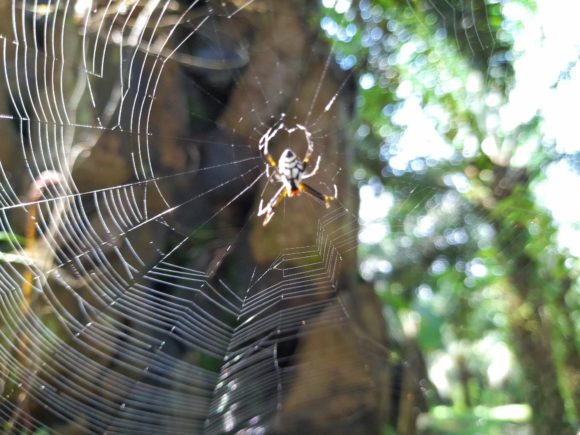
In the dense, humid rainforests of Kalimantan, Indonesia, a quiet marvel of engineering persists. It is not built of steel or concrete, but of proteinaceous silk extruded from spinnerets. This structure, known variously as a spider web, spiderweb, spider’s web, or cobweb, serves a singular, brutal purpose: to catch prey. Yet, when we observe the intricate geometry of a spider with its web, we see more than a trap. We see a blueprint for resilience, adaptability, and structural integrity that modern professionals, creators, and entrepreneurs are only beginning to fully appreciate.
The analogy extends beyond biology into the very core of how we build our lives and businesses. There is a profound observation regarding these natural structures: the weakness of the spider’s house is not in the elements or the structure of the building itself. If structural integrity were the sole benchmark, the spider’s house would be considered the strongest house in existence. The true weakness lies in the main function of a house. A home is meant to shelter and protect; a web is designed to intercept and capture. This distinction offers a critical lens through which we can view modern workflows, digital architectures, and personal productivity systems.
The Structural Integrity of Natural Design
To understand why the spider with its web is such a potent metaphor for modern strategy, we must first appreciate the material science involved. Spider silk is, pound for pound, stronger than steel and more elastic than nylon. In Kalimantan, where humidity levels can challenge even the most robust synthetic materials, these webs remain functional and intact. They withstand wind, rain, and the struggle of captured insects without collapsing.
This durability is not accidental. It is the result of millions of years of evolutionary iteration. For today’s business owners and freelancers, this highlights the importance of foundational strength. Whether you are coding a new application, designing a marketing campaign, or structuring a remote team, the underlying "silk" of your project—your core values, your code quality, your communication protocols—must be resilient. If the foundation is weak, no amount of aesthetic polish will prevent collapse under pressure.
However, the spider does not build a fortress. It builds a network. This shift from solid mass to interconnected tension is where the lesson becomes particularly relevant for the digital age. We are moving away from rigid, hierarchical structures in favor of flexible, networked systems. The spider web is the ultimate example of a distributed network: damage to one strand does not necessarily compromise the entire structure, provided the anchor points remain secure.
Redefining Function: Shelter vs. Capture
The most intriguing aspect of this biological phenomenon is the philosophical contradiction it presents. As noted, the weakness of the spider’s house is not in its construction but in its function. A traditional house protects those inside from the outside world. A spider web exposes the creator to the elements in exchange for the ability to capture resources from that same environment.
For entrepreneurs and marketers, this is a pivotal distinction. In the past, businesses often operated like fortresses, trying to shield their intellectual property and market share from competitors. Today, successful entities operate more like a spiderweb. They position themselves openly in the digital ecosystem, creating value networks that attract customers, partners, and data. The "weakness" of exposure is actually a strategic advantage. By being visible and interconnected, you increase your surface area for opportunity.
Consider the modern content creator. They do not hide their work; they broadcast it across platforms, creating a digital cobweb of links, references, and engagements. This openness makes them vulnerable to criticism and competition—the "elements"—but it is the only way to catch the "prey" of attention and conversion. The lesson here is clear: stop trying to build walls. Start building webs.
Adaptability in Changing Environments
In Kalimantan, environmental conditions are dynamic. Rainstorms are frequent, and vegetation grows rapidly. A spider must constantly assess its surroundings and adjust its web accordingly. If a branch moves, the web must stretch or be rebuilt. If the prey population shifts, the web’s design may change to target different insects.
This adaptability is crucial for professionals navigating the rapid shifts in technology and market preferences. The rigid five-year plan is obsolete. Instead, we need agile frameworks that allow for real-time adjustment. When a new algorithm changes how search engines rank content, or when a new tool disrupts a workflow, the successful professional does not lament the change. They rebuild the web.
- Monitor Tension: Just as a spider senses vibrations in its web, professionals must stay attuned to market signals. Use analytics and feedback loops to detect shifts early.
- Repair Quickly: Damage is inevitable. A broken link, a failed product launch, or a lost client is a torn strand. The key is rapid repair, not perfection.
- Reanchor Strategically: Sometimes, the old anchor points (platforms, skills, partnerships) no longer hold. Be willing to detach and find new, stronger supports.
Practical Implications for Modern Workflows
How does the concept of the spider with its web translate into daily practice? It begins with intentionality. A spider does not spin silk randomly; every strand has a purpose. Similarly, our digital and professional outputs should be intentional.
For educators and bloggers, this means creating content that interlinks meaningfully, forming a cohesive knowledge base rather than isolated posts. For business owners, it means building customer relationships that are interconnected, creating a loyal community that supports the brand through referrals and feedback. For developers, it means writing modular code that can be updated without breaking the entire system.
The efficiency of the spider is also noteworthy. Spiders often recycle their silk, consuming old webs to create new ones. This circular economy approach is increasingly relevant in sustainable business practices. Resource optimization is not just an environmental imperative; it is an economic one. By reusing data, repurposing content, and refining existing processes, we reduce waste and increase efficiency.
The Strength in Vulnerability
Ultimately, the spiderweb teaches us that strength is not about impenetrability. It is about responsiveness. The web vibrates with every touch, allowing the spider to react instantly. In our hyper-connected world, the ability to sense and respond is more valuable than the ability to resist.
When we accept that our "house" is not a bunker but a trap for opportunity, we change our relationship with risk. We stop fearing exposure and start leveraging it. We understand that the cobweb in the corner of our digital presence is not a sign of neglect, but potentially a sign of a well-laid trap waiting for the right moment.
As we look to the future of work and creativity, let us take inspiration from the rainforests of Kalimantan. Let us build structures that are strong yet flexible, exposed yet resilient. Let us recognize that the true power of the spider with its web lies not in hiding from the storm, but in dancing with it. By aligning our strategies with these natural principles, we can create systems that are not only durable but deeply effective in capturing the value we seek.
In conclusion, whether you are a freelancer managing your personal brand or a corporation navigating global markets, consider the architecture of your efforts. Are you building walls that keep opportunities out, or are you weaving webs that draw them in? The choice defines not just your structure, but your success.