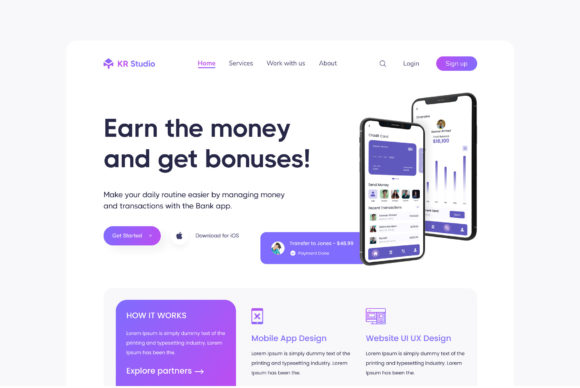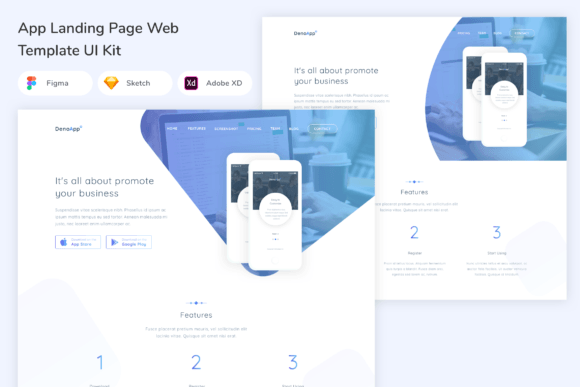
Streamlining Mobile App Launches with a Modern App Landing Page Web Template UI Kit
In the competitive landscape of mobile application development, the gap between a functional product and a successful market entry is often defined by presentation. Developers and entrepreneurs frequently invest months in coding robust features, only to stumble at the final hurdle: communicating value to potential users. This is where a professionally designed App Landing Page Web Template UI Kit becomes an indispensable asset. It serves not merely as a visual wrapper, but as a strategic tool that bridges the technical complexity of app development with the intuitive expectations of modern consumers.
The demand for high-quality digital presence has shifted dramatically. Today’s users form opinions within seconds of landing on a webpage. If the interface feels outdated, cluttered, or inconsistent, trust erodes immediately. Consequently, the reliance on pre-built, customizable design systems has evolved from a shortcut for beginners to a standard practice for seasoned professionals. By leveraging a template designed with current aesthetic trends, creators can ensure their launch platform resonates with contemporary user preferences while significantly reducing time-to-market.
The Evolution of Design Workflows and User Expectations
Historically, creating a landing page required a disjointed workflow involving separate teams for graphic design, front-end development, and content strategy. This siloed approach often led to inconsistencies and prolonged revision cycles. However, the modern digital ecosystem favors agility. The rise of comprehensive UI kits reflects a broader shift in how creative professionals operate. There is a growing recognition that efficiency does not have to compromise quality. In fact, starting with a solid foundation allows designers to focus their energy on brand-specific customization rather than reinventing basic structural elements.
This evolution is driven by changing user habits. Mobile-first indexing and the dominance of smartphone usage mean that landing pages must be flawless across various devices and screen sizes. Users expect seamless navigation, fast load times, and visually appealing interfaces that mirror the quality of the app itself. A template that is built with these expectations in mind provides a significant advantage. It ensures that the foundational UX principles—such as clear call-to-action placement, readable typography, and intuitive hierarchy—are already established, allowing marketers and developers to concentrate on messaging and conversion optimization.
Why Modern Design Trends Matter for Conversion
Aesthetics are not superficial; they are functional. An App Landing Page Web Template UI Kit designed with modern trends incorporates psychological cues that guide user behavior. Current design languages emphasize clarity, whitespace, and bold typography. These elements reduce cognitive load, making it easier for visitors to understand the app’s value proposition quickly. When a template adheres to these standards, it signals professionalism and reliability.
Moreover, design trends are not static. They evolve in response to technological advancements and cultural shifts. For instance, the integration of dark mode options, micro-interactions, and accessible color contrasts are no longer optional extras but expected features. A high-quality UI kit stays ahead of these curves by incorporating such elements into its core structure. This forward-looking approach ensures that the landing page remains relevant and effective long after the initial launch, reducing the need for frequent, costly redesigns.
Flexibility Across Professional Design Tools
One of the most critical aspects of any design resource is its compatibility with existing workflows. Professionals rarely rely on a single software ecosystem. Some teams prefer the vector precision of Sketch, while others collaborate in real-time using Figma. Legacy projects might still reside in Adobe Photoshop, and interactive prototypes may require Adobe XD. A versatile UI kit acknowledges this diversity by providing source files for all major platforms.
This multi-format support eliminates the friction of file conversion and ensures that layers, groups, and components remain intact regardless of the tool used. For a freelancer juggling multiple clients with different preferences, or a large agency with specialized teams, this flexibility is invaluable. It means that the design handoff process is smoother, and edits can be made directly in the preferred environment without losing fidelity. The ability to modify the template simply, without battling incompatible file structures, empowers creators to iterate rapidly based on feedback or A/B testing results.
The Power of Pixel-Perfect and Organized Assets
Behind every seamless user experience lies a meticulously organized design file. The term "pixel perfect" is often overused, but in the context of a professional UI kit, it refers to the precision and consistency of UI elements. When buttons, icons, and input fields are aligned to a strict grid system, the resulting interface feels stable and trustworthy. This attention to detail extends to the organization of the file itself.
Well-layered and organized files are crucial for efficient customization. Imagine opening a design file where every element is named logically, grouped appropriately, and separated into distinct layers for backgrounds, content, and overlays. This structure allows designers to toggle visibility, adjust colors, or swap out images with minimal effort. It transforms the template from a static image into a dynamic workspace. For non-designers or marketers who need to make minor text updates or color adjustments to match brand guidelines, this organization reduces the risk of accidental errors and makes the modification process accessible.
Customization: Colors, Fonts, and Vector Shapes
While templates provide structure, branding requires individuality. A robust UI kit offers extensive customization options without requiring advanced design skills. The inclusion of customizable layers for fonts and colors allows teams to align the landing page with their corporate identity instantly. Whether your brand relies on a vibrant, energetic palette or a subdued, professional tone, the ability to adjust these global styles ensures consistency across all sections of the page.
Furthermore, the inclusion of free fonts and icons removes licensing headaches and additional costs. Typography plays a pivotal role in readability and brand voice. By providing high-quality, web-safe font pairings, the template ensures that text remains legible and engaging on all devices. Similarly, icons serve as visual anchors that help users scan content quickly. A library of 100 customizable vector shapes adds another layer of creative freedom. These shapes can be used to create unique backgrounds, highlight key features, or add visual interest to otherwise plain sections. Because they are vector-based, they scale infinitely without losing quality, ensuring crisp visuals on high-resolution retina displays.
Continuous Improvement and Future-Proofing
The digital landscape is perpetually in flux. What works today may feel dated tomorrow. Therefore, the value of a UI kit is not just in its initial state but in its longevity. Providers who commit to continuous updates demonstrate an understanding of this reality. By adding new elements, refining existing components, and adapting to emerging design standards, they ensure that the template remains a viable long-term investment.
Access to free updates means that users are not locked into a static product. As new features are added—perhaps new section layouts for testimonials, updated icon sets, or enhanced mobile responsiveness tweaks—the user benefits immediately. This ongoing support transforms the transaction from a one-time purchase into a partnership. It allows businesses to keep their landing pages fresh and aligned with current best practices without incurring the cost of hiring external designers for minor refreshes. This model supports sustainable growth, enabling creators to focus on their core product while maintaining a polished external presence.
Practical Implications for Entrepreneurs and Marketers
For entrepreneurs and small business owners, resources are often limited. Time spent wrestling with design software is time taken away from product development or customer acquisition. Using a high-quality App Landing Page Web Template UI Kit allows these stakeholders to launch with a professional-grade asset that competes with larger competitors. It levels the playing field by providing access to enterprise-level design standards at a fraction of the cost.
Marketers, too, benefit from the modularity of these kits. The ability to quickly swap out screenshots, adjust headlines, or change call-to-action buttons facilitates rapid experimentation. In an era where data-driven decision-making is paramount, the agility to test different visual approaches is crucial. A well-organized template makes this iterative process straightforward, allowing marketers to optimize conversion rates based on real user behavior rather than guesswork.
Ultimately, the goal is to create a cohesive narrative that guides the user from curiosity to download. A template that combines aesthetic appeal with functional clarity supports this journey. It ensures that the first impression is not just positive, but persuasive. By integrating modern design trends, offering cross-platform compatibility, and prioritizing ease of customization, these UI kits empower creators to build landing pages that are not only beautiful but also effective drivers of growth.
In conclusion, the choice of a design foundation is a strategic decision. It impacts brand perception, user engagement, and operational efficiency. By selecting a template that offers pixel-perfect elements, organized layers, and continuous updates, professionals can navigate the complexities of modern web design with confidence. The result is a landing page that truly reflects the quality of the app it promotes, fostering trust and encouraging adoption in an increasingly crowded marketplace.